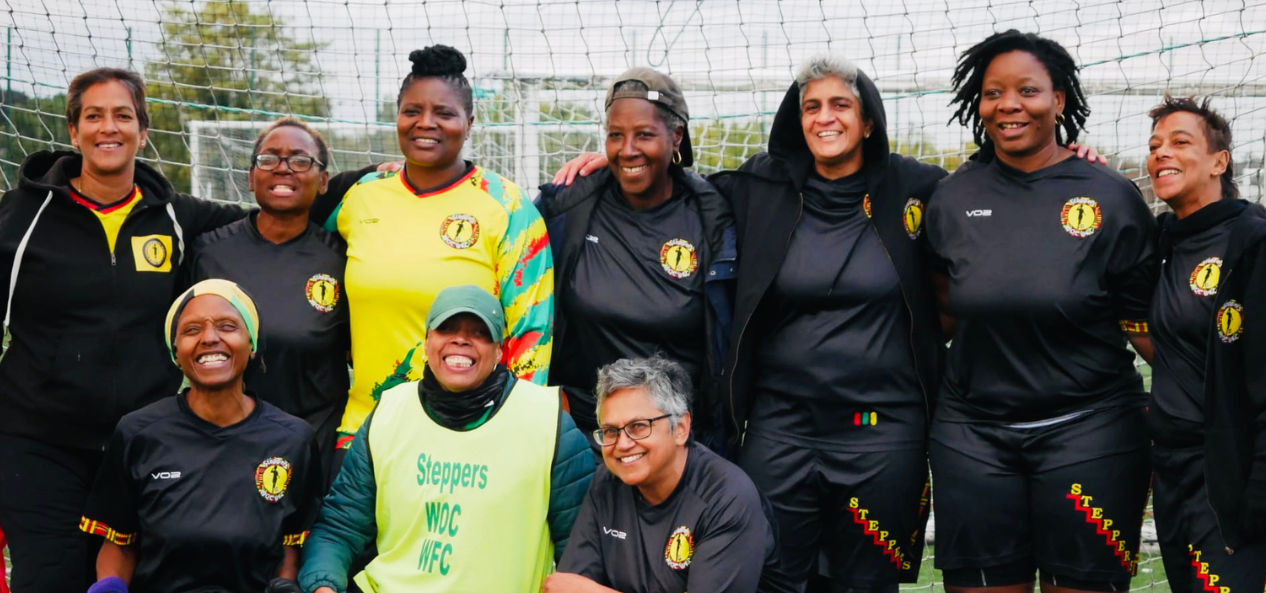
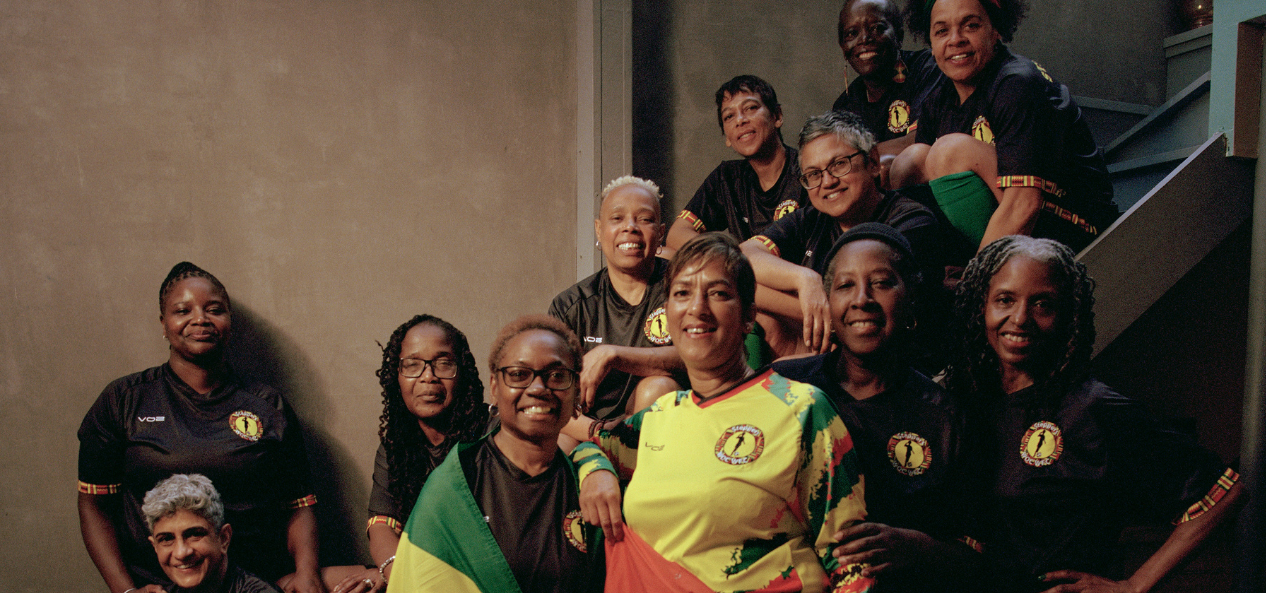
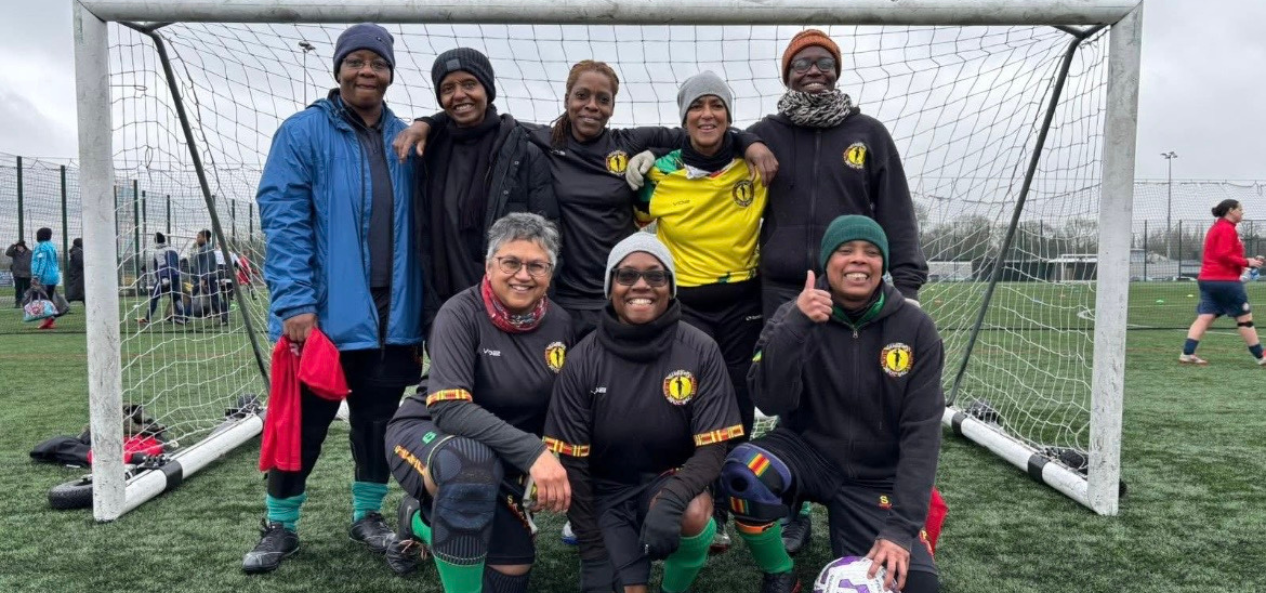
Steppers Women Of Colour Walking Football Club work with women of colour, especially those from underrepresented backgrounds who may face barriers to participating in sport and physical activity.
Sessions are open to women aged 40+ of all abilities, including beginners, those returning to exercise after a break, and those who may not feel comfortable in traditional football environments.
Why was your Initiative created?
Steppers Women of Colour Walking Football Club was founded in April 2021 during the COVID-19 pandemic to address the disproportionate isolation and limited access to sporting opportunities faced by women of colour aged over 40.
It aims to overcome long-standing racial and structural barriers that have hindered the participation and representation of ethnically diverse women in walking football and team sports.
How did you understand what people wanted?
We gathered insights from women of colour through informal conversations, listening to their experiences, and identifying barriers to sport participation (e.g., lack of representation, cultural sensitivity, confidence, accessibility).
We also used surveys and feedback forms to understand preferences for activity type, session times, and environment.
Research on women of colour’s participation in physical activity emphasised the importance of inclusive, welcoming, and non-competitive spaces.
Observing existing walking football sessions and community groups provided further insights into effective practices and areas for improvement.
By combining direct feedback, research, and observation, we developed a clearer understanding of what people desired: safe, supportive, culturally inclusive sessions that prioritise enjoyment, wellbeing, and community over competition.
How did you promote your activities?
We effectively reached women of colour through community-based and digital promotion.
We shared information through local groups, word of mouth, and trusted networks like faith groups, cultural organisations, and community leaders.
We also used social media platforms like WhatsApp, Facebook, and Instagram to share flyers, updates, and testimonials, building awareness and trust. Flyers and posters were distributed in local venues like community centres, libraries, and leisure facilities.
Steppers was featured in an officially commissioned “This Girl Can” film, highlighting the message that women of colour over 40 belong in sport.
The film celebrates self-determination, embodied joy, and the right to live fully at any age, providing powerful representation for communities often overlooked in sporting narratives.
Impact of Steppers Women of Colour Walking Football Club
Since its launch in April 2021, Steppers has provided consistent, accessible opportunities for Women of Colour to engage in regular physical activity.
Many participants had previously disengaged from sport due to injury, health conditions, lack of representation, cost barriers, or negative past experiences.
Walking football’s adapted format, combined with Steppers’ inclusive ethos, has enabled women to return to sport and sustain participation over several years.
Participants reported improved fitness, endurance, mobility, and cardiovascular health, as well as reduced stress, anxiety, improved mood, increased confidence, and a renewed sense of motivation and purpose.
Steppers has fostered strong peer support, social connection, and belonging, which are key protective factors against isolation and poor mental health. The team environment encourages mutual encouragement, laughter, music, and celebration, reframing physical activity as joy rather than obligation.
Many women have remained active members for multiple years, progressed into competitive play, and represented Steppers in tournaments across England. The club’s recent registration in the Herts League marks a significant milestone, demonstrating progression, commitment, and long-term sustainability.
What challenges have you faced and how did you overcome them?
Funding was a major challenge, limiting our ability to buy essential items, pay for pitch hire, and travel to tournaments. To overcome this, we minimised costs by using shared or donated equipment, seeking discounted venues, and encouraging car-sharing. We also explored grants, sponsorships, and fundraising.
Another challenge was the lack of a dedicated administrative team. Key roles like accounting, event organising, and communications were managed by volunteers, which meant team members had to take on multiple responsibilities.
To address this, we adopted a collaborative approach, sharing tasks based on skills and availability. We kept processes simple, used basic digital tools, and encouraged team ownership. Despite limited resources, this effort has allowed the initiative to grow and remain sustainable.
What are your plans for the future?
Our focus is on sustaining and growing the initiative while improving the experience for participants.
We plan to continue delivering regular sessions in a safe, welcoming, and culturally inclusive environment, gradually increasing participation and outreach to more women of colour.
To improve the programme, we aim to secure additional funding and sponsorship to support costs such as equipment, pitch hire, and travel to tournaments. This will reduce financial barriers and allow more members to participate consistently.
We also plan to strengthen our structure by building a small volunteer or administrative team to support key areas such as finance, communications, event planning, safeguarding, and partnership development. This will reduce pressure on current members and improve organisation.
In addition, we hope to introduce more opportunities such as friendly matches, taster sessions, and partnerships with local organisations to increase visibility and engagement.
We will continue to gather feedback from participants to adapt sessions to their needs, ensuring the initiative remains relevant, inclusive, and enjoyable for everyone involved.
Your Top Tip for others looking to organise something similar?
Begin by listening to your community’s needs. Understanding their experiences, barriers, and motivations will help you create a welcoming, relevant, and sustainable solution.
Start small and build, don’t wait for perfect funding, facilities, or a full team. Use what you have, involve participants in shaping the group, and share responsibilities to foster ownership. A supportive, inclusive environment encourages people to return and bring
others.
How does Steppers Women of Colour Walking Football Club embody the 'Self-Affirming' action area?
Our initiative creates a space where women of colour feel seen, valued, and confident, positively impacting their employment and personal development.
Participants may face workplace barriers like lack of representation, confidence, or feeling unheard.
Our sessions build self-belief, communication skills, and a sense of identity, translating into greater confidence in professional environments.
Participants also take on informal roles like organising sessions, supporting new members, coordinating communication, or helping with events, developing transferable skills like leadership, teamwork, organisation, and responsibility.
By affirming identity and building confidence, we support wellbeing, physical activity, and empower women to recognise their strengths and potential in work and career progression.
You can find out exactly
how we'll look after your personal data, but rest assured we’ll only use it to make sure you receive our newsletter, to understand how you interact with our newsletter, and to provide administrative information about our newsletter.